Not as wonky as my previous offering, happily! If you look closely you can see the nubbins of snowmen that appeared to have been decapitated by the time I got there.
Showing posts with label red. Show all posts
Tuesday, 14 February 2012
Snowy Gates
Not as wonky as my previous offering, happily! If you look closely you can see the nubbins of snowmen that appeared to have been decapitated by the time I got there.
Sunday, 12 February 2012
Wonky Architecture in the Snow
There's a reason why I hardly ever post pictures of architecture or buildings or even landscapes on this blogs, and it's because I struggle like a small child to take pictures that are even vaguely level. The even sadder thing is that my camera actually does have a "grid" function that you can turn on, superimposing a grid onto the screen, and then you can line up the picture with the lines on the screen and not take photos that look like they've been captured by a seasick photographer on the high seas. Alas, I have only ever turned the grid function on by mistake, and I have no idea how to do it on purpose. Consequently I fear that my photographs will continue to be as ludicrously wonky as this one.
Another snowy architecture photo. I do like the colours in the photo, especially the weirdly green trees, covered in lichen. If only my hands weren't so ludicrously wobbly!
Labels:
arch,
architecture,
buildings,
green,
path,
photograph,
red,
sky,
snow,
trees,
white,
winter
Tuesday, 17 January 2012
Natural Decor
Out for a wander one day, I came across this plant, which had twined itself around a rather hideous chain link fence and then sprouted some nice red berries, greatly improving the look of the thing. It was rather as though nature had decided to put up its own Christmas decorations, albeit rather late.
Sunday, 15 January 2012
Tree Trunk
Oh, how I wish this was in better focus! It was just a bit too dark for the camera to cope well with it, but the colour of the wood was what I wanted to capture and using the flash just deadened it completely. So it remains, a teeny bit too blurry to be good, but still alright, I guess. This was a particularly cool piece of fallen wood, anyhow, and the red ferns and blue-green lichen are an interesting contrast. I guess I shall just have to return to the tree trunk on a sunnier day.
Friday, 13 January 2012
Winter Berries
Lovely red winter berries on a sunny (yet extremely cold) day. It's enough to make you want to cook some kind of delicious red berry strudel.
Except I didn't know whether or not they were poisonous.
Wednesday, 14 December 2011
5 Reasons Giant Pandas Are a Boost to the Economy
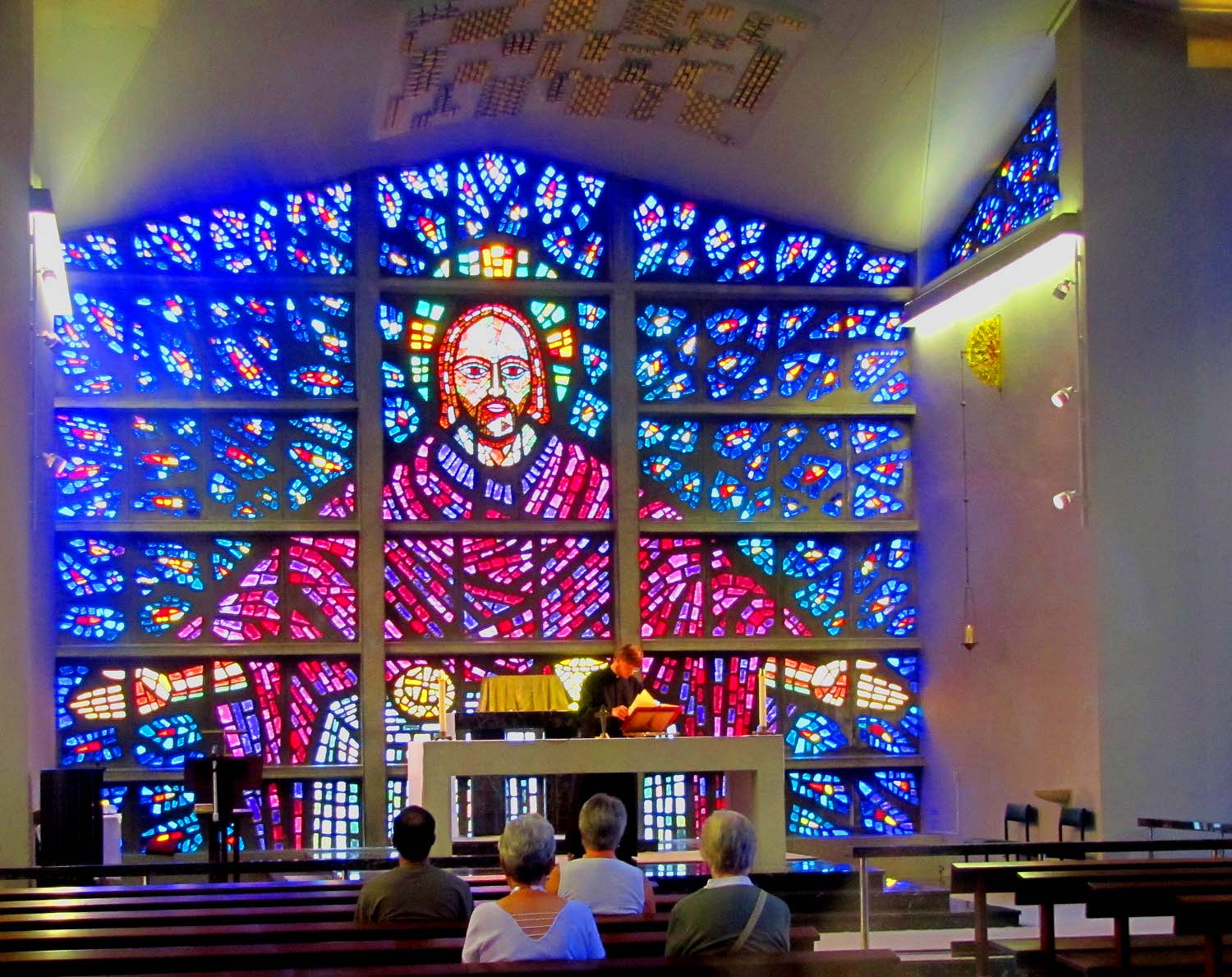
Another picture of the impressive and rather modern stained glass at Buckfast Abbey. I do like the way the light shines through it. But that's not what I want to talk about today.
There has been a surprising amount of vitriol directed at the Edinburgh Zoo's newest arrivals; two giant pandas on loan from China until 2021, Tian Tian and Yang Guan. This is largely because it is supposedly costing the zoo $1,000,000 per year to host them, which some people see as a waste of money. However, I love pandas, and so I disagree. I have thought about this complex issue in great depth, and present my conclusions below:
5 Reasons Giant Pandas Are a Boost to the Economy
1. Pandas are black and white. Therefore, as monochrome creatures, their arrival will be saving newspapers everywhere a small fortune on printing costs. Everyone knows that coloured ink is more expensive.
2. Pandas eat nothing but bamboo. As every gardener knows, bamboo grows like the blazes and is tricky to get rid of. Horticulturalists across the nation can send their unwanted bamboo to Edinburgh Zoo, and the pandas will eat for free every night.
3. Pandas are reluctant breeders, at best. Fewer panda babies means fewer claims for child support.
4. Pandas take shelter in trees or caves, but they do not build permanent homes. This means that the chance of giant pandas precipitating another subprime mortgage crisis is virtually nil.
5. Pandas, unlike many members of our great nation, are actually supposed to be fat and lazy. This means that, unlike humans of similar size and girth, they will not demand costly gastric banding procedures on the NHS.
| Stained Glass at Buckfast Abbey |
There has been a surprising amount of vitriol directed at the Edinburgh Zoo's newest arrivals; two giant pandas on loan from China until 2021, Tian Tian and Yang Guan. This is largely because it is supposedly costing the zoo $1,000,000 per year to host them, which some people see as a waste of money. However, I love pandas, and so I disagree. I have thought about this complex issue in great depth, and present my conclusions below:
5 Reasons Giant Pandas Are a Boost to the Economy
1. Pandas are black and white. Therefore, as monochrome creatures, their arrival will be saving newspapers everywhere a small fortune on printing costs. Everyone knows that coloured ink is more expensive.
2. Pandas eat nothing but bamboo. As every gardener knows, bamboo grows like the blazes and is tricky to get rid of. Horticulturalists across the nation can send their unwanted bamboo to Edinburgh Zoo, and the pandas will eat for free every night.
3. Pandas are reluctant breeders, at best. Fewer panda babies means fewer claims for child support.
4. Pandas take shelter in trees or caves, but they do not build permanent homes. This means that the chance of giant pandas precipitating another subprime mortgage crisis is virtually nil.
5. Pandas, unlike many members of our great nation, are actually supposed to be fat and lazy. This means that, unlike humans of similar size and girth, they will not demand costly gastric banding procedures on the NHS.
Labels:
black,
boost,
buckfast abbey,
economy,
edinburgh zoo,
giant pandas,
glass,
light,
pandas,
photograph,
reasons,
red,
stained glass
Tuesday, 29 November 2011
High Drama
A rather lovely and highly melodramatic rose, still covered in raindrops after a brief shower. I always find it tricky to get nice pictures of roses, and this took an awful lot of attempts, but I'm fairly pleased with how it came out! Worthy of a tragic romance...
Thursday, 3 November 2011
Pitcher Perfect
This is a picture of a carnivorous pitcher plant. They lure insects into the pitcher, and they then fall in, are drowned in the liquid inside the plant, and are gradually dissolved. Nice, huh? It is a cunning adaptation to soil that's too poor for most plants to survive.
Labels:
close up,
green,
leaf,
photograph,
pitcher plant,
plant,
red
Friday, 28 October 2011
Sunrise, Sunset
It's a sunset, actually, but that's not the point. Although Wikipedia tells me that sunset colours are "typically more brilliant than sunrise colours, because the evening air contains more particles than morning air". Who knew?
One of the most depressing things about winter is when the nights start drawing in. I do not appreciate night arriving while I am still in the office. It is rude.
Monday, 24 October 2011
Red Earth
Another picture from my holiday in Devon, to show how bright red the cliffs by the railway are.
One of the fun things we did on holiday was to go visit one of my relatives and her husband who live near Dartmoor in a gorgeous house. They were really welcoming and lovely and served an absolutely incredible cream tea (and anyone who knows me knows I love cream teas immensely), with teeny delicious sandwiches and cute little scones with two kinds of jam, real clotted cream and an incredible slab of cake covered in strawberries. I made an absolute pig of myself.
But moving away from the food aspect of things, we also had fun discussing star signs and I resolved that on my return I would look up what I'm supposed to be like (I'm a Cancerian). Apparently Cancerians are the "least clear cut" of all the star signs. Negative traits according to this site include: untidy, sulky, devious, moody, inclined to self-pity, inferiority complex, brood on insults (very often imagined), easily flattered, tactless and difficult, often change their opinions and loyalties, lack stability, easily corrupted and (my favourite) can make successful confidence tricksters.
You have been warned.
Friday, 14 October 2011
Petals
This is one of my absolute favourite photos. And one of my less original post titles, oops. The disadvantage of the way I post pictures on this blog is that they're all teeny so you don't get to appreciate the clarity of the photo at full resolution. I originally intended to put them all up on flickr and then cross post them here, but a) it seemed like effort and b) I managed to lock myself out of my flickr account (genius, I know).
I am considering adding some of the photos to posts at full size under a cut, if I can work out how to do it, and this is a prime candidate! No clue what kind of flower it is, though. A pink one?
I did consider using it as my desktop background, but it would mean ousting two very charming narwhals, to whom I am very attached. Did you know that the narwhal's tusk is actually a tooth which grows right through the top lip of the male narwhals? Some of them even have two.
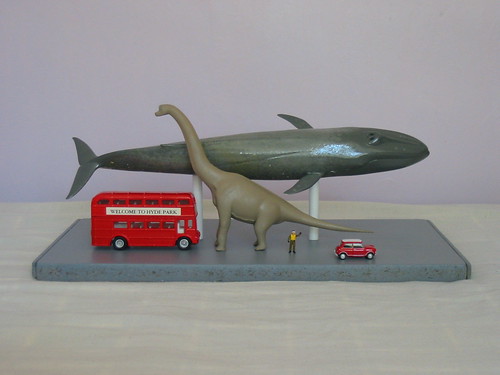
National Geographic's website does the classic "size of whale compared to a bus" analogy on all its whale pages (a humpback is the size of one large bus; a blue whale about three buses; a narwhal less than one bus). Why is it that whales are always compared to buses? It seems strange that "a bus" has become an informal unit of measurement for sea mammals.(And dinosaurs). How did this begin? Why the relentless association with buses? Why not a train? or a tank? or a herb garden? Has anyone found the first instance in which a whale was compared in size to a bus? And how does it work across national boundaries? A London double-decker bus seems to be the standard measurement in the UK, but judging by the pictures on Nat Geo's website, they're using an American yellow school bus. These buses are different sizes. Is this accounted for in the comparison? Will we ever know?
Tuesday, 4 October 2011
Glass Light
This is actually a shot of the very modern stained glass windows at Buckfast Abbey which I mentioned previously. As well as the very traditional main building of the church, complete with elegant windows depicting various saints, they have a large and startlingly modern chapel section right at the back. The entire east wall of this chapel is taken up with a stained glass depiction of Jesus which, to be honest, I found wildly disconcerting. It's something that I would associate more with the very commercialised wings of American evangelism rather than a community of Benedictine monks, but there you go. Personally I'd rather not be stared at by a giant Jesus with square pupils, but whatever floats your boat. Or illuminates your monastery, possibly.
Anyway, alongside freaky Jesus there were some modern abstract stained glass windows which I actually rather liked, and this is a close-up short of some of the chunks of glass. I like the texture particularly.
Labels:
blue,
close up,
dark,
light,
photograph,
red,
stained glass,
yellow
Wednesday, 10 August 2011
Red Tailed Bumblebee
Bombus lapidarius, the red-tailed bumblebee. Or at least, I looked through an identification guide to British bees, and that's what I came up with.
The word "bombus", the genus name for bumblebees, apparently comes from the Latin word for "booming". Which frankly I think is something of an exagerration. Bloody Romans.
Labels:
bee,
bombus,
British,
bumblebee,
lapidarius,
Latin,
red,
red-tailed,
tail
Monday, 8 August 2011
Raspberry Ripple Flower, and a Fact of the Day
The pattern of these petals is stunning and reminds me of an interesting thing, which I hereby present to you as my Fact Of The Day: some flowers have markings on their petals which we can't see, because they reflect UV light that our eyes don't pick up. Certain pollinating insects can see into different spectral bands than humans, and the flowers' colouring reflects this; sometimes what appears to us as a fairy unexciting bloom looks quite different if you use a camera which is able to record ultra violet or infra red light. There's a really nice website here which has photos of different flowers shown as they normally appear to us, and coloured to show the UV patterns and fluorescence which we can't see. Some of my favourite examples include this picture, which I think is featured in Richard Dawkins' book The Greatest Show On Earth, this very jazzy example, and this rather dramatic bloom, which clearly shows the "bulls-eye" pattern that a lot of UV-patterned flowers exhibit.
So next time you see a rather plain and insipid bouquet, just remember: perhaps it's your eyes and not the flowers which are at fault...
Labels:
flower,
illustration,
infra red,
insects,
oddlings and ends,
patterns,
petals,
photography,
pink,
red,
spectrum,
ultra violet,
UV,
veins,
white,
xylem
Subscribe to:
Posts (Atom)